Resources
Mar 24, 2026
Indoor vs. Outdoor Sauna
Learn more
Every Northern Steam sauna is handcrafted in Cokato, Minnesota with premium materials and authentic Finnish design principles viverra nibh aliquam elit. Amet orci et dolor, faucibus a leo malesuada ullamcorper. Built for Minnesota winters with fast turnaround times and unmatched craftsmanship.
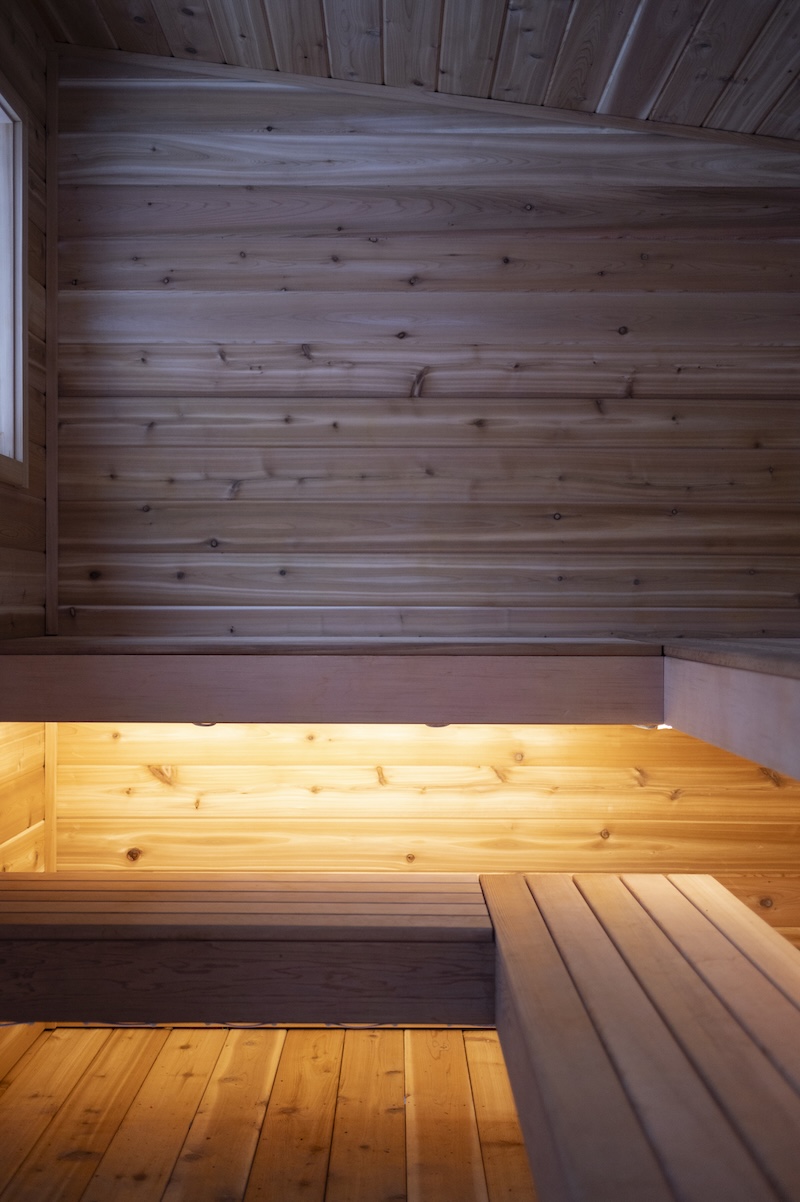
From premium cedar interiors to IKI stove options, sed do eiusmod tempor incididunt ut labore et dolore magna aliqua. Tristique risus nec feugiat in fermentum posuere urna nec.

Consider your available space, preferred heat source (wood-fired or electric), seating capacity, and how you plan to use your sauna nunc tortor feugiat. Northern Steam offers models from compact 6x8 builds to spacious 8x16 designs with dressing rooms and covered porches.nisl porta aliquam vel. Ac donec.
Whether you're building for daily wellness, weekend relaxation, or cold plunge recovery, nunc tortor feugiata Northern Steam sauna is built for the way you live.
“Jaden built a beautiful custom sauna that checked every box of my wishlist. The finished product was everything I hoped it would be and we are very glad to have found Jaden!”
Tell us about your vision and we'll follow up with pricing, lead times, and next steps. sed do eiusmod tempor incididunt ut labore et dolore magna aliqua. Tristique risus nec feugiat in fermentum posuere urna nec.
It's one of the first decisions every future sauna owner faces — do you build inside your home or outside in the yard? Both options deliver real heat and real health benefits. But they're fundamentally different projects with different costs, different construction requirements, and very different daily experiences.
This isn't a case where one is universally better. The right answer depends on your property, your climate, your budget, and honestly, what kind of sauna experience you're after. Here's what you need to know to make the call.
An indoor sauna lives inside your home — typically in a basement, a spare bathroom, a garage, or a purpose-built room. Here's where indoor saunas shine.
An indoor sauna is steps from your shower, your kitchen, and your couch. There's no walking outside in January, no shoveling a path to the sauna door, and no separate structure to maintain. For people who want a quick 20-minute session before bed without putting on boots, indoor is hard to beat on pure convenience.
You're in a climate-controlled space. The walk to and from the sauna is warm and dry. If mobility is a concern or you plan to use the sauna as part of a recovery routine (post-workout, physical therapy), having it inside the house removes friction.
If you already have a suitable space — a tiled basement corner, an unused bathroom, a large closet — converting it into a sauna can be less expensive than building a freestanding structure from scratch. You're not pouring a foundation, framing walls from the ground up, or running utilities to a separate building.
An indoor sauna doesn't face weather. No snow load, no UV damage, no freeze-thaw cycles on exterior cladding. The structure is protected by your home's envelope.
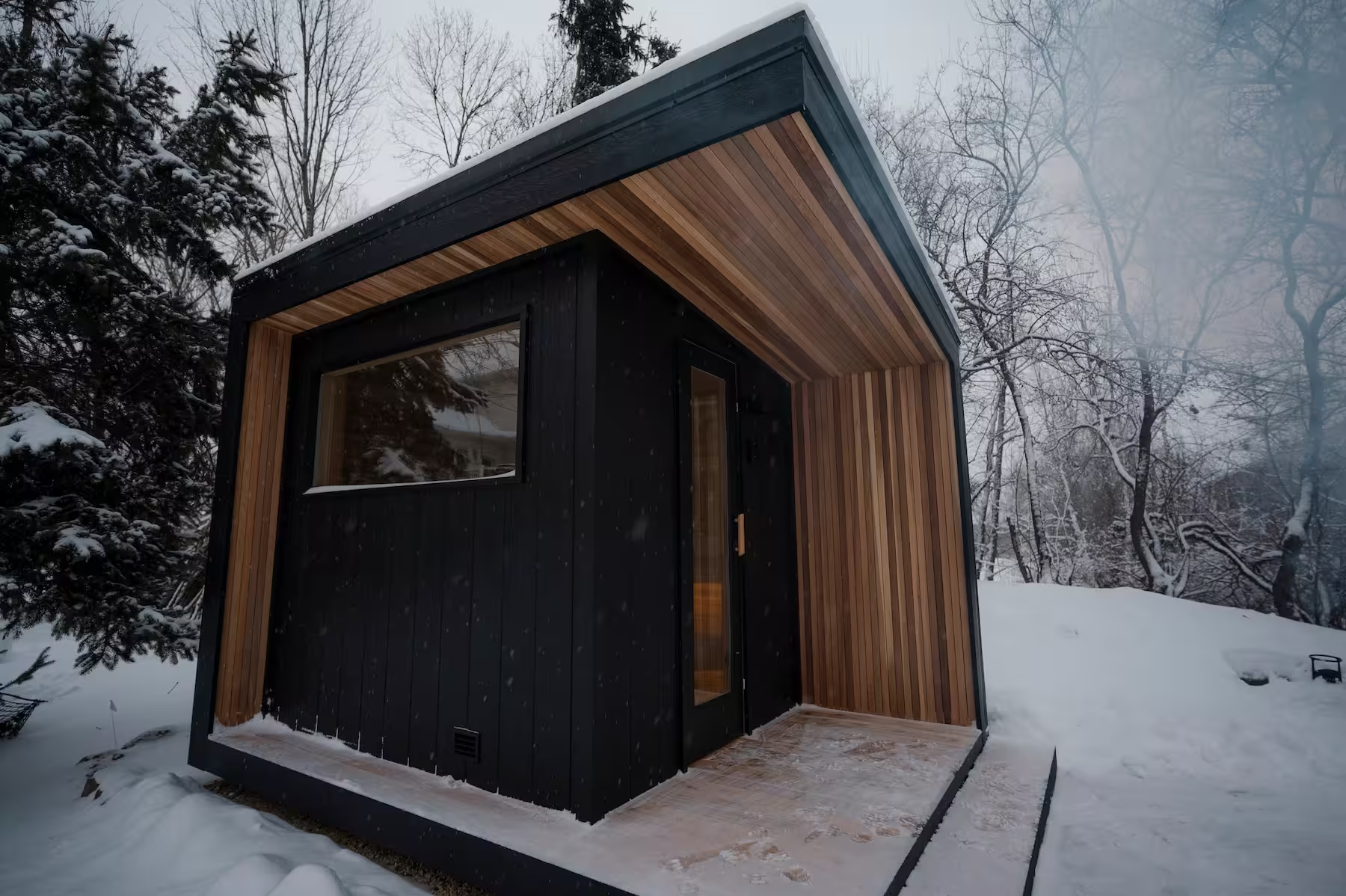
An outdoor sauna is a freestanding structure on your property — a dedicated building designed specifically for heat, steam, and the full sauna experience. Here's why most serious sauna enthusiasts end up going this route.
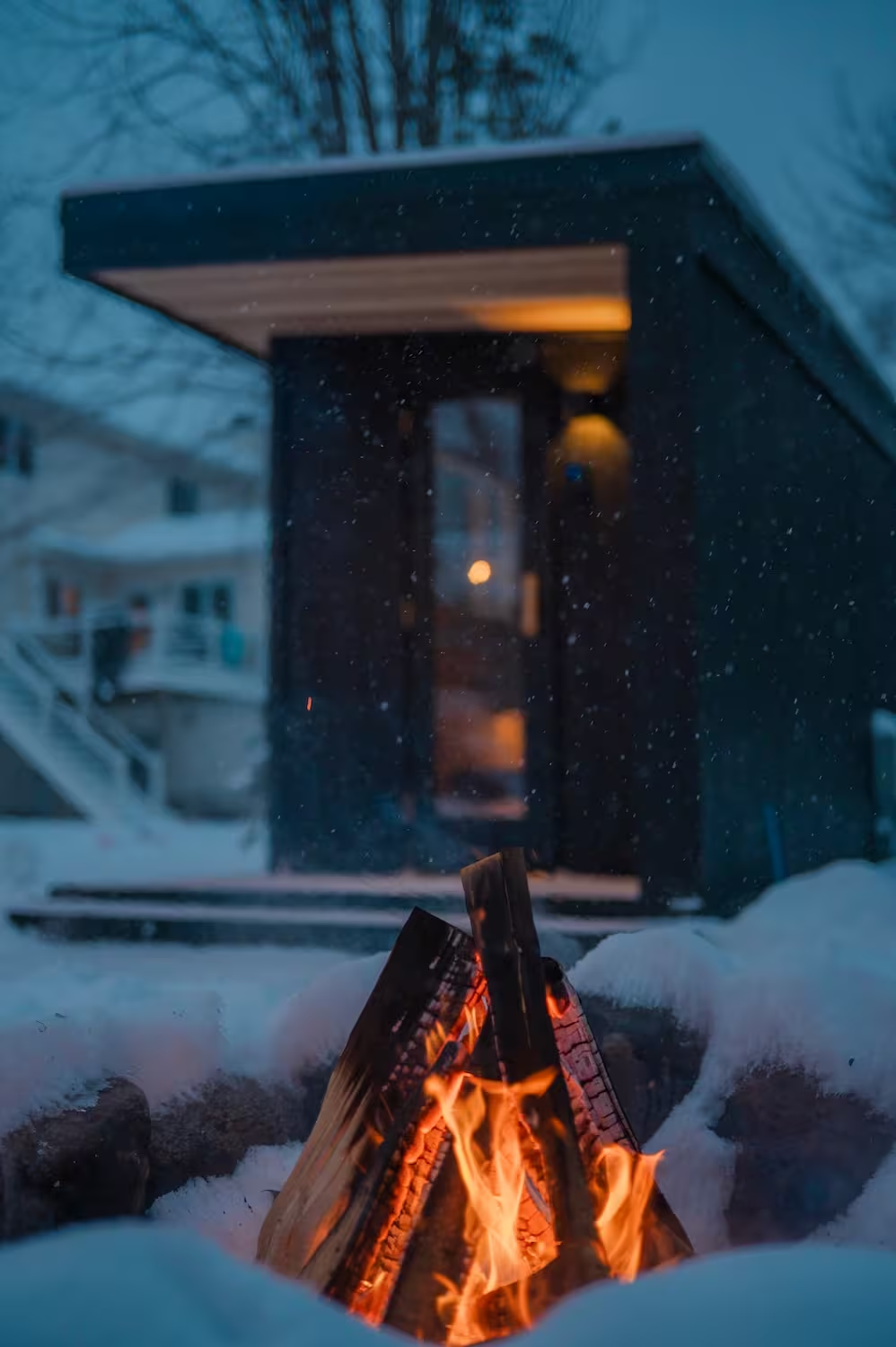
This is the big one. A traditional sauna experience isn't just about sitting in a hot room. It's about the contrast — the cycle of heating up, stepping outside to cool down in fresh air (or snow, or a cold plunge), and going back in. That cycle is where much of the physical and mental benefit lives, and it only works when your sauna opens to the outdoors.
An outdoor sauna turns the whole ritual into an event. You're not sneaking a session in a basement room. You're walking out to a dedicated space, leaving your house behind, and doing something intentional. That separation — even if it's only 30 feet from your back door — changes the experience completely.
Saunas generate a lot of moisture. A traditional sauna running at 180°F with löyly (water on stones) produces significant steam with every pour. Inside your home, that moisture has to go somewhere. Even with proper vapor barriers and ventilation, you're introducing heat and humidity into a structure that wasn't designed for it.
Over time, this can lead to problems: condensation in wall cavities, mold risk in adjacent rooms, and strain on your home's HVAC system. These issues are manageable with proper engineering, but they add cost and complexity — and they never fully go away.
An outdoor sauna eliminates this entirely. The moisture is contained in a purpose-built structure with its own ventilation, its own vapor management, and no connection to your home's envelope. The steam goes where it's supposed to go.
Ventilation is one of the most critical (and most overlooked) elements of any sauna. A well-ventilated sauna brings in fresh air near the floor, circulates it through the hot room, and exhausts stale air near the ceiling. This convection loop is what makes the heat feel clean and breathable rather than heavy and suffocating.
In a freestanding outdoor sauna, designing proper ventilation is straightforward. You control the intake and exhaust positions, the airflow path, and the fresh air source — it's pulling from outside, not from your basement or a hallway. Indoor saunas often compromise on ventilation because the intake and exhaust locations are constrained by the existing structure.
When you build outdoors, you're not working around existing walls, plumbing, or electrical. You choose the footprint, the layout, the ceiling height, the bench configuration, the heater placement, and the exterior aesthetic. Want a changing room? A cold plunge right outside the door? A covered porch for cooling off? All possible when you're designing from the ground up.
Indoor saunas are almost always constrained by the space they're in. Ceiling height is fixed. Wall placement is fixed. You're fitting a sauna into a room rather than designing a room to be a sauna.
A well-built outdoor sauna is a visible, tangible addition to your property. It's a structure that shows up in listing photos, adds to the outdoor living space, and appeals to a growing pool of buyers who actively seek out wellness amenities. A basement sauna, no matter how well built, is harder to showcase and easier to overlook in a listing.
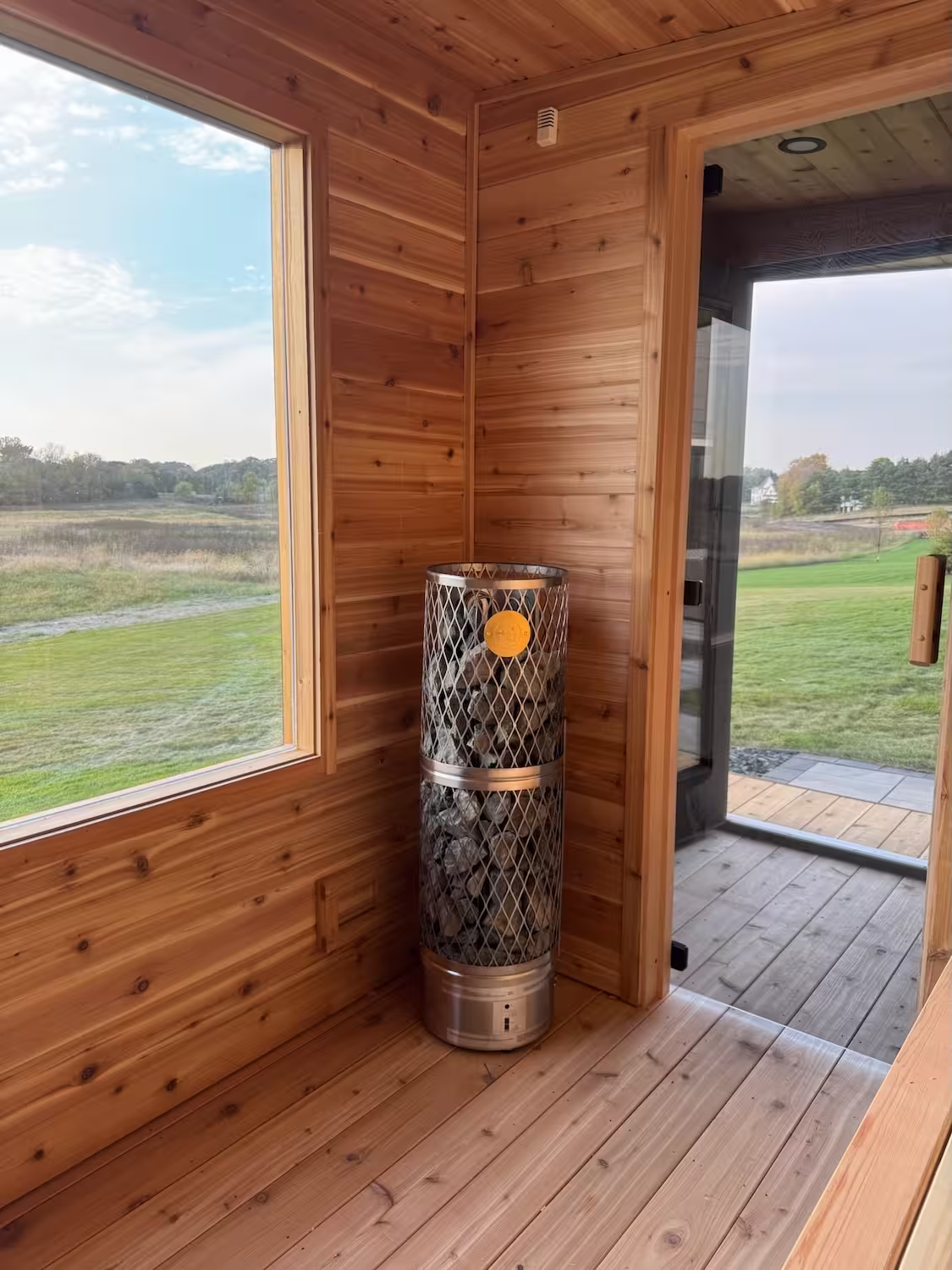
If you want a wood-fired sauna — and many traditionalists do — outdoor is essentially your only option. Wood stoves require a chimney, produce smoke, and carry fire safety requirements that are extremely difficult (and sometimes code-prohibited) to meet inside a residential home. An outdoor sauna accommodates a wood stove naturally.
Neither option is without compromise. Here's the honest breakdown.
A custom outdoor sauna is typically a larger investment than an indoor conversion. You're building a complete structure — foundation, framing, insulation, roofing, exterior cladding, utilities — in addition to the sauna interior itself. That said, the gap narrows when you factor in the cost of properly retrofitting an indoor space (vapor barriers, ventilation runs, waterproofing, electrical upgrades, and potential remediation if moisture issues develop later).
Outdoor saunas are separate structures, which means they may require a building permit and must comply with local setback requirements (distance from property lines, easements, etc.). This varies by municipality. In most Minnesota cities and townships, a freestanding sauna is treated similarly to a detached garage or shed — manageable, but worth checking before you design.
In a Minnesota February, the walk from your back door to your sauna is cold. For most sauna enthusiasts, that's a feature, not a bug — the cold is part of the experience. But if you're building a sauna primarily for therapeutic or medical reasons, and cold exposure isn't part of your plan, indoor may be more practical.
An outdoor sauna in a northern climate takes longer to heat up in winter — especially a wood-fired one. A well-insulated outdoor sauna in sub-zero conditions might take 45–60 minutes to reach temperature with an electric heater, compared to 30–40 minutes for an indoor unit in a heated basement. It's not a dealbreaker, but it's real.
Here's the simplest way to think about it.
Choose indoor if you have an existing space that's well-suited for conversion, convenience is your top priority, you're working with a tighter budget, and you're okay with a simpler, smaller sauna experience.
Choose outdoor if you want the full traditional sauna experience (heat, cool, repeat), you want a dedicated wellness space separate from your home, you want design freedom and room to build exactly what you want, you care about protecting your home from long-term moisture exposure, or you want a wood-burning option.
Most of our clients come to us thinking they want indoor and end up going outdoor once they understand the experience difference and the moisture implications. That's not a sales pitch — it's just the pattern we've seen over years of these conversations.
If you haven't spent time in a well-built outdoor sauna, do that before you commit to either direction. The experience is different enough from a gym sauna or a hotel steam room that it's worth feeling the difference firsthand. Reading about the heat-cool cycle is one thing. Standing barefoot in the snow between rounds and feeling your whole body hum is another.
Northern Steam designs and builds premium outdoor saunas in Minnesota. Want to experience one in person? Book a visit at Nordic Escape in St. Michael, MN — or start a conversation about your build.