Resources
Mar 1, 2026
How to Choose the Right Sauna Heater: The Only Guide You Need
Learn more
Lorem ipsum dolor sit amet, consectetur adipiscing elit. Vel ut congue varius congue aliquet leo. Netus neque nibh semper in diam viverra nibh aliquam elit. Amet orci et dolor, faucibus a leo malesuada ullamcorper. Amet pellentesque velit felis mollis turpis pellentesque donec. Cursus consectetur mattis molestie nibh no.
Lorem ipsum dolor sit amet, consectetur adipiscing elit, sed do eiusmod tempor incididunt ut labore et dolore magna aliqua. Tristique risus nec feugiat in fermentum posuere urna nec.

Lorem ipsum dolor sit amet, consectetur adipiscing elit. Morbi amet, lorem tristique feugiat ac lorem maecenas. At integer mauris, nunc tortor feugiat. Velit id non ipsum posuere vel et tellus vestibulum tortor. Facilisis sit ac hac arcu. Lectus integer egestas eget mauris ultrices. Lacus, luctus fringilla massa faucibus amet pretium est rutrum. Phasellus nisl porta aliquam vel. Ac donec.
Lorem ipsum dolor sit amet, consectetur adipiscing elit. Morbi amet, lorem tristique feugiat ac lorem maecenas. At integer mauris, nunc tortor feugiat. Velit id non ipsum posuer.
“Lorem ipsum dolor sit amet, consectetur adipiscing elit. Nunc gravida purus urna, ipsum eu morbi in enim. Amet quis dignissim eu pulvinar nunc, risus tincidunt nulla mi. Pharetra odio.”
Lorem ipsum dolor sit amet, consectetur adipiscing elit, sed do eiusmod tempor incididunt ut labore et dolore magna aliqua. Tristique risus nec feugiat in fermentum posuere urna nec.
There's a moment — somewhere between the first wave of dry heat hitting your skin and the deep exhale that follows — when you realize just how much the heater matters. It's the heart of every sauna. Get it right, and you've built a sanctuary. Get it wrong, and you've built a warm closet.
Whether you're planning a backyard sauna build, upgrading an aging unit, or outfitting a commercial wellness space, choosing the right sauna heater is the single most important decision you'll make. This guide breaks down everything you need to know — from fuel types and sizing to the finer points of steam quality and stone capacity.
The walls, the bench wood, the lighting — they all contribute to ambiance. But the heater defines the experience. It determines how quickly your sauna reaches temperature, how evenly heat distributes through the room, how the steam (or löyly, as the Finns call it) feels when water hits the stones, and how much energy you'll burn keeping it all running.
A poorly matched heater leads to cold spots, sluggish heat-up times, and frustrating energy bills. A well-chosen one disappears into the background and lets you focus on the only thing that matters: the heat.
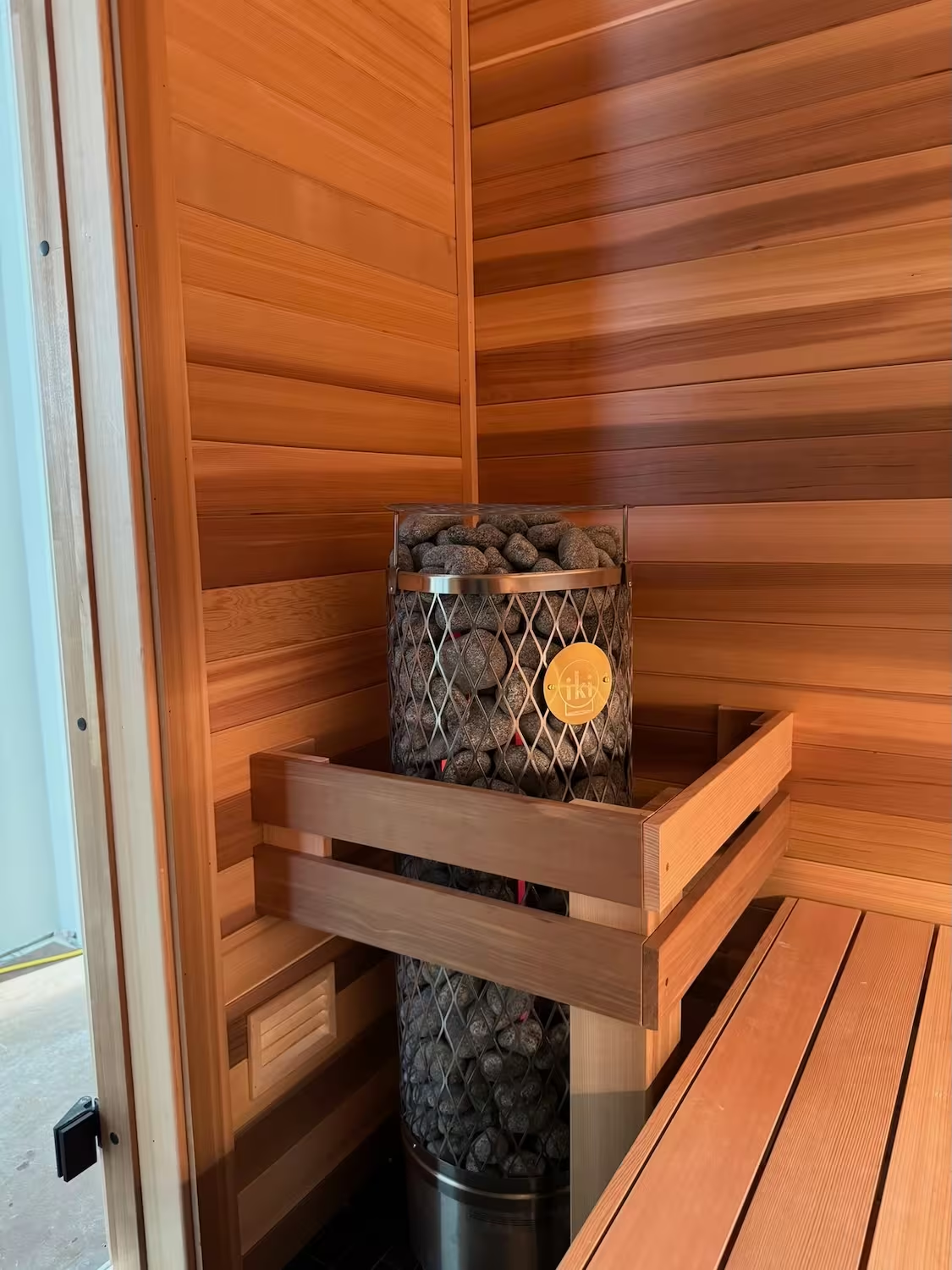
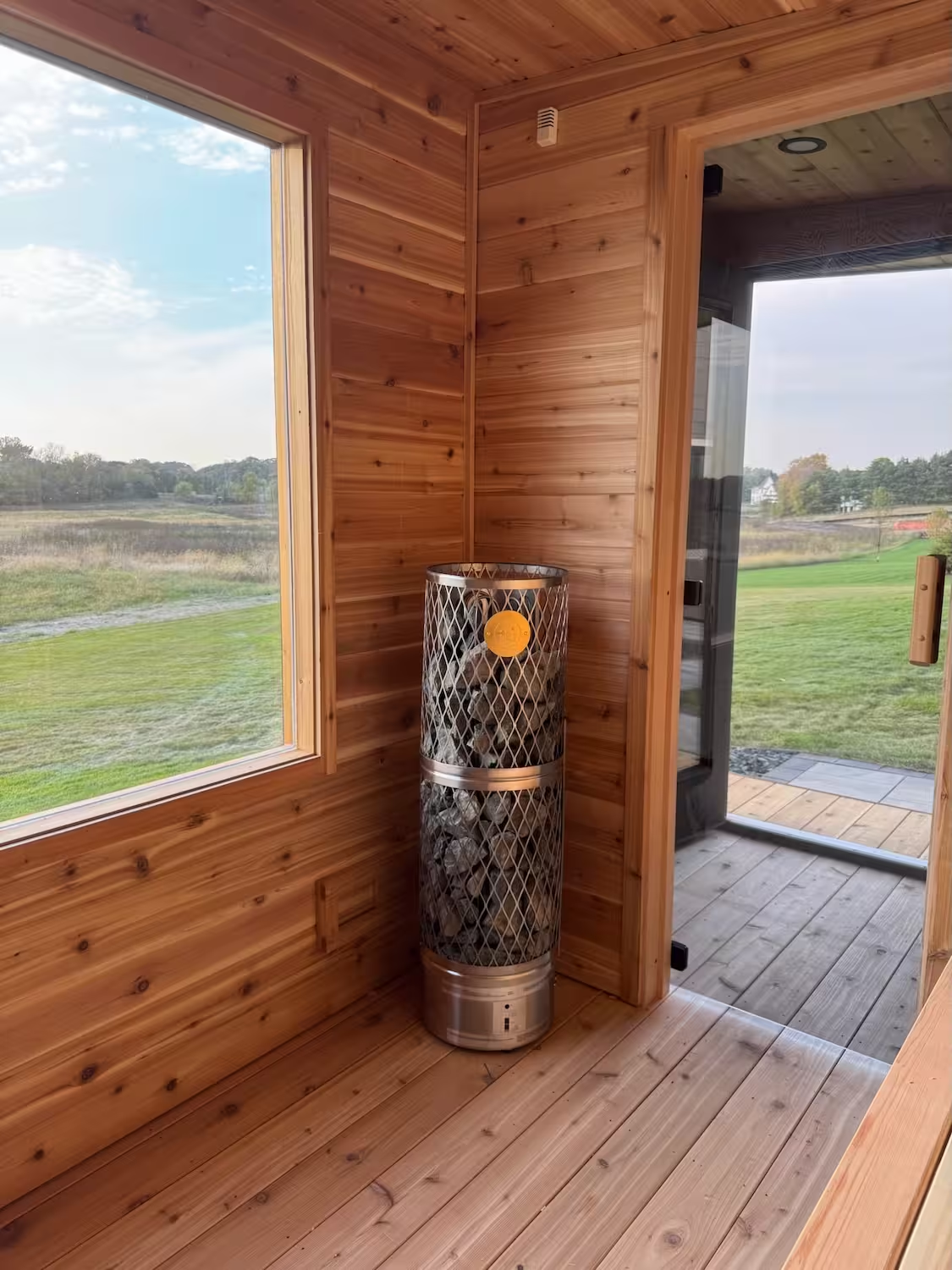
Electric heaters are the most popular choice for residential saunas, and for good reason. They're clean, require no venting, and offer precise temperature control — often down to a single degree. Modern units come with digital controllers, timer functions, and even Wi-Fi connectivity for remote operation.
They're ideal for indoor installations, basement saunas, and smaller rooms where simplicity and convenience are top priorities. Most residential electric sauna heaters run on 240V circuits (common in North America) and range from 3kW for compact personal saunas up to 18kW or more for larger rooms.
Best for: Indoor saunas, urban installations, beginners, and anyone who values convenience and low maintenance.
Trade-off: Purists sometimes feel electric heaters produce a "sharper" heat compared to the softer, more enveloping warmth of a wood-fired unit. The löyly quality depends heavily on the stone mass — budget electric heaters with small rock trays can feel harsh.
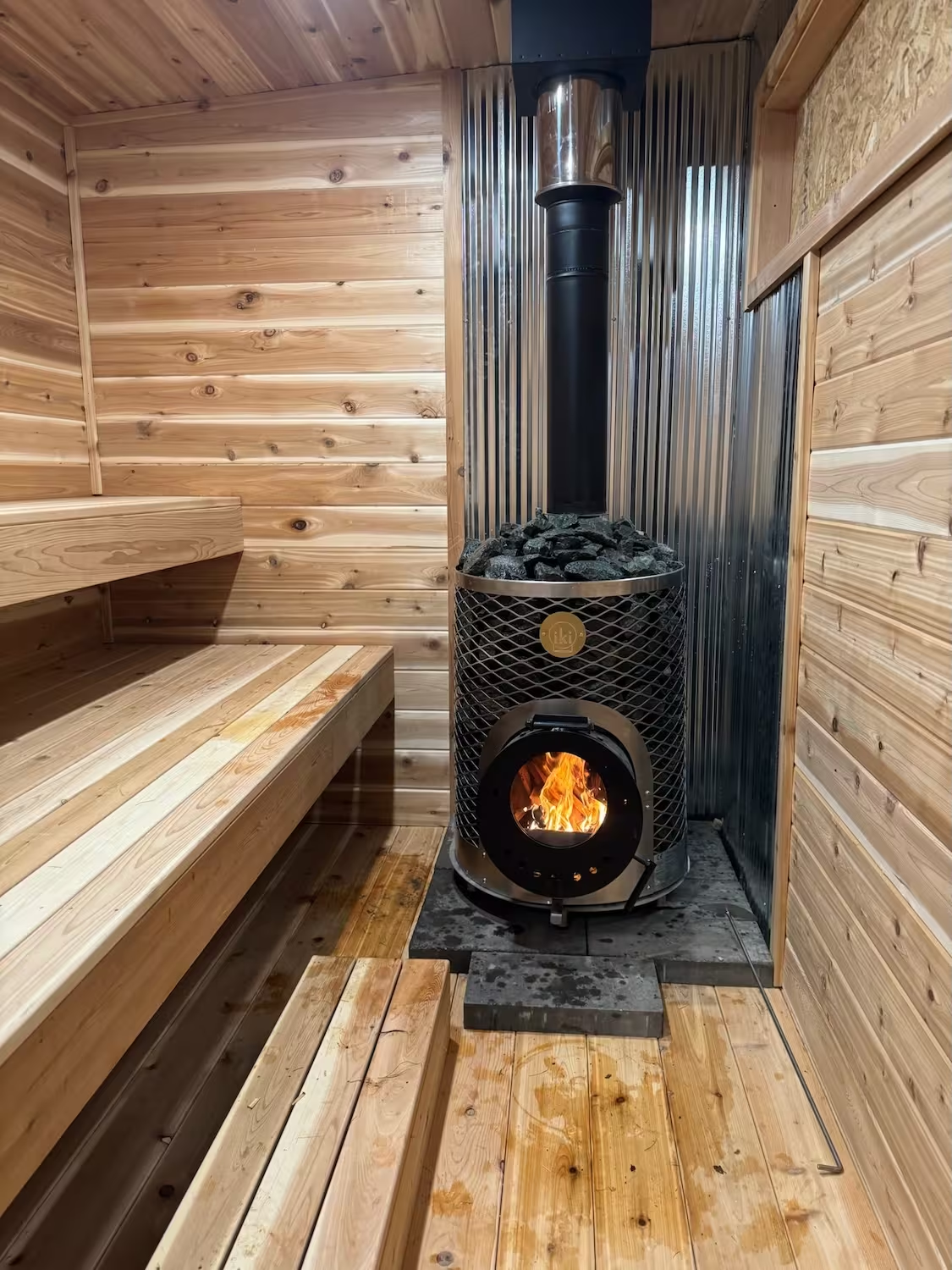
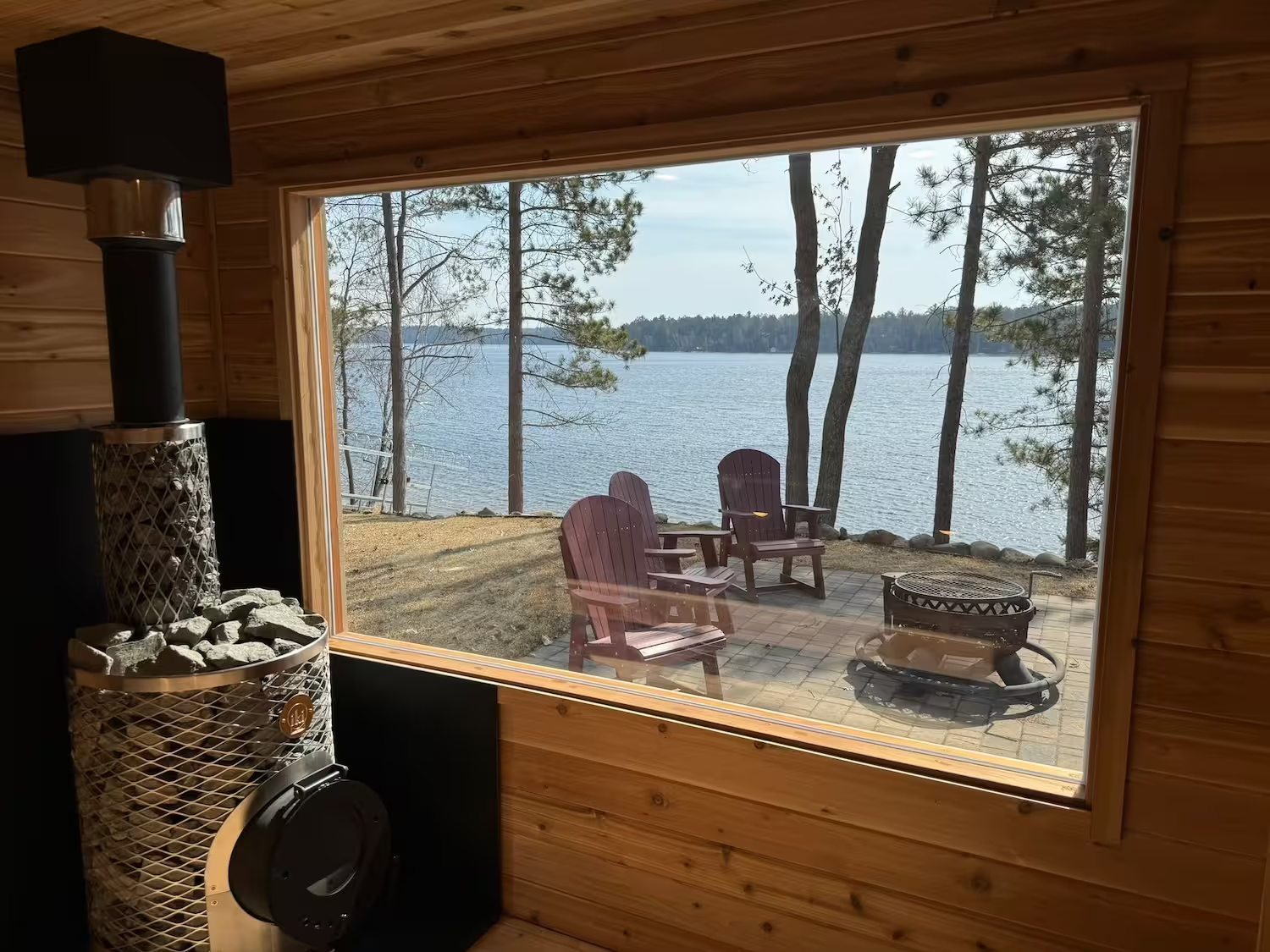
For many sauna enthusiasts, nothing compares to the ritual of a wood-fired sauna. The act of building a fire, tending it, and waiting for the stones to reach temperature is part of the experience — not a chore, but a form of meditation.
Wood-burning heaters produce a radiant, full-bodied heat that many describe as "softer" and more natural than electric. They typically carry a larger stone mass, which translates to better steam and a more stable temperature that doesn't fluctuate when you throw water on the rocks.
They do require a chimney or flue system, proper clearance from combustible materials, and a steady supply of dry firewood. Installation is more involved and must meet local building codes.
Best for: Outdoor saunas, off-grid builds, cabins, and anyone who values the traditional sauna ritual.
Trade-off: Longer heat-up times (45–90 minutes), more maintenance, and ongoing fuel costs. Not practical for many indoor or urban settings.
Gas heaters (natural gas or propane) occupy a middle ground between electric and wood. They heat up quickly, produce a warm and even heat profile, and can handle large commercial rooms that would require oversized electrical service.
They're less common in residential settings but are a staple in health clubs, spas, and hotel wellness facilities. Installation requires gas lines, proper venting, and compliance with gas appliance codes.
Best for: Commercial installations, large sauna rooms, and locations where gas is readily available but high-amperage electrical service is not.
Trade-off: Higher installation complexity and cost. Limited selection compared to electric and wood-burning options.
Undersizing a sauna heater is one of the most common and costly mistakes in sauna building. An undersized heater will struggle to reach temperature, run continuously, and burn out sooner.
The general rule of thumb is 1kW per 50 cubic feet of sauna room volume. But that's just the starting point. You'll need to adjust upward for several factors:
For example, a well-insulated 6' × 8' sauna with a 7-foot ceiling has about 336 cubic feet of volume, which calls for roughly a 6–7kW heater. Add a glass door and a cold climate? You're looking at 8–9kW minimum.
The rocks sitting on top of or surrounding your sauna heater aren't decorative — they're functional. Sauna stones absorb, store, and radiate heat. They also produce steam when you pour water over them.
More stone mass means more stable temperatures, softer heat, and better löyly. This is one area where many budget electric heaters fall short; a small rock tray simply can't store enough thermal energy to deliver the kind of steam that makes a sauna session truly great.
Look for heaters with a stone capacity of at least 40–50 pounds for a small sauna, and 80–200+ pounds for larger rooms or a more traditional experience. Tower-style electric heaters (sometimes called "sauna pillars") are designed specifically around this principle, packing a large stone mass into a vertical column.
When selecting stones, use sauna-rated igneous rocks like olivine, peridotite, or vulcanite. Avoid river rocks or limestone — they can crack, crumble, or release harmful dust when heated.
Digital controllers allow you to set precise temperatures and program the heater to turn on before you arrive. Some units offer smartphone integration, which sounds like a luxury until the first time you start your sauna from the couch on a cold evening.
Look for automatic shutoff timers (typically 1–12 hours), overheat protection, and cool-touch exteriors if the heater will be in a space where contact is possible. All quality electric heaters will have these; if a unit doesn't, move on.
Stainless steel inner and outer shells resist corrosion from steam and humidity. Cheaper units with painted mild steel will rust and deteriorate within a few years of regular use. This is not the place to cut corners.
A heater warranty of 3–5 years on components is standard for quality residential units. Some premium brands offer longer coverage. Pay attention to what's actually covered — heating elements are the most common failure point and should be included.
Regardless of type, every sauna heater installation should follow the manufacturer's clearance specifications to combustible materials. These aren't suggestions — they're fire safety requirements.
Electric heaters need a dedicated circuit with the proper amperage and wire gauge. Most 240V residential units require a 30–60 amp breaker depending on wattage. Hardwiring by a licensed electrician is required; plug-in sauna heaters exist only at the very low end of the market.
Wood-burning heaters need a code-compliant chimney system, floor protection, and wall shielding. Many jurisdictions require permits for wood-burning appliance installations.
Always check local building codes and consult professionals for gas and wood installations.
Infrared panels are sometimes marketed as sauna heaters, but they create a fundamentally different experience. Traditional saunas heat the air and stones to 150–200°F (65–93°C), producing the classic hot-room environment. Infrared panels heat your body directly at much lower ambient temperatures (typically 120–140°F).
Both have legitimate wellness applications, but they're different experiences. If you're after the traditional sauna — the hot room, the steam, the ritual of water on stone — you want a conventional heater, not infrared.
Choosing a sauna heater comes down to four questions:
Where is the sauna? Indoor installations lean electric. Outdoor and off-grid builds open the door to wood-fired. Commercial spaces may benefit from gas.
How big is the room? Measure your volume, adjust for glass, insulation, and climate, and don't undersize.
What experience do you want? If the ritual matters, wood is hard to beat. If convenience and precision matter more, electric is the way. If you want great löyly from an electric heater, prioritize stone capacity above all else.
What's your budget? Quality electric heaters start around $500 and go up to $3,000+. Wood-burning units range from $400 to $2,500, not including chimney systems. Gas heaters are generally $1,500 and up before installation.
The best sauna heater is the one that matches your space, your lifestyle, and the experience you're chasing. Take the time to get it right — everything else in your sauna depends on it.